If you look at how businesses are operating in 2026, one thing is pretty clear — everything is moving faster.
More work, tighter timelines, and at the same time, constant pressure to manage costs. That combination is what makes hiring a bit tricky these days.
It’s not just about finding people anymore. It’s the whole process around it that takes time — and sometimes more effort than expected.
That’s usually when companies start thinking about working with a Manpower Outsourcing Company. Not always right away, but eventually it comes up.
So what’s really changing here?
Traditionally, hiring meant building your own team, managing everything internally, and growing from there.
That still works. But it also means handling recruitment, payroll, compliance, training… and those things don’t always stay small as the business grows.
With outsourcing, a lot of that shifts outside.
A Manpower Outsourcing Company steps in and handles most of the workforce side — or at least a big part of it. You’re still running the business, but you’re not involved in every hiring detail.
And for many companies, that difference is enough to consider it seriously.

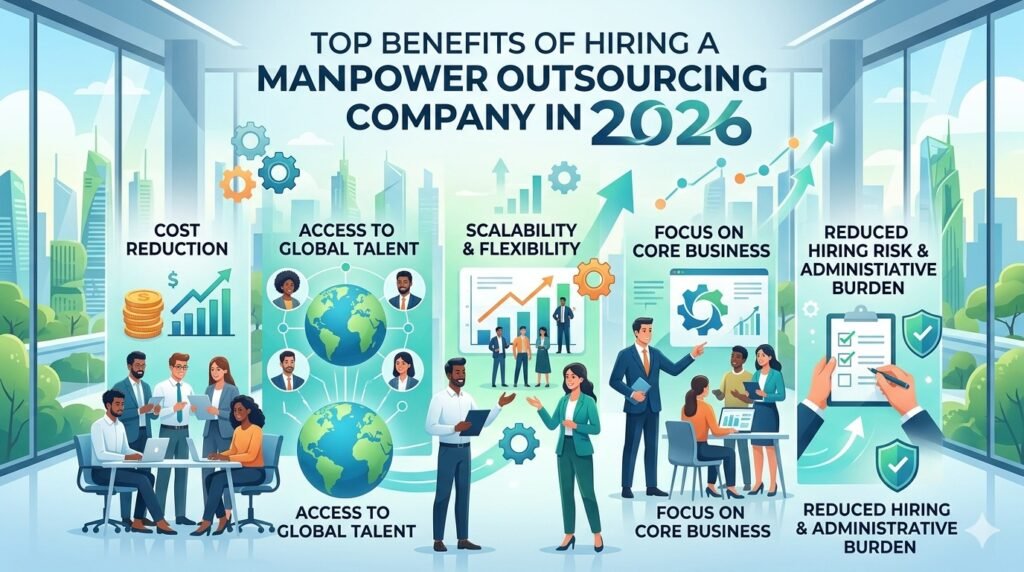
The cost part — because that’s where most people start
At first glance, hiring seems straightforward. You calculate salaries and that’s it.
But then you go through it once or twice and realize there’s more involved.
Training, HR time, employee benefits, admin work… it doesn’t look big individually, but together it adds up.
Outsourcing doesn’t remove all costs, obviously. But it changes how those costs are handled.
Instead of managing everything internally, you’re paying for a service that already includes those pieces in some way.
For some businesses, that works out better. For others, it depends.
Hiring speed (this tends to matter more than expected)
One thing that often gets underestimated is how long hiring actually takes.
Even when things go smoothly, it’s still a process — posting jobs, reviewing profiles, interviews, onboarding.
A Manpower Outsourcing Company already has access to workers, so that timeline shortens quite a bit.
And when there’s pressure to start work quickly, that speed becomes important.
About skilled workers
Finding skilled people is not always easy. Even when you find them, getting them ready takes time.
With outsourcing, the expectation is a bit different.
Workers usually come with prior experience, so they don’t need as much time to adjust. Not always perfect, but generally smoother.
That alone can make daily operations easier.

Flexibility — this is something businesses notice later
At the beginning, flexibility doesn’t always seem like a big deal.
But then workloads change. Suddenly there’s more work, or sometimes less.
Outsourcing makes it easier to adjust without making long-term commitments every time.
With in-house hiring, changes are possible too… just not as quickly.
The internal workload (this part is often ignored)
Managing people takes effort — not just hiring them, but everything after.
Payroll, attendance, compliance, documentation — it’s ongoing.
A Manpower Outsourcing Company takes a lot of that responsibility away.
And sometimes, that’s the main reason companies go for it. Not cost, not speed — just reducing internal pressure.
Productivity — not a guarantee, but it helps
When people already know their job, things tend to move faster.
Less supervision, fewer early mistakes.
It doesn’t mean everything becomes perfect overnight, but there’s usually less friction in the process.
Over time, that adds up.
Risk and compliance
There’s always a legal side to hiring — contracts, labour laws, safety rules.
Not every business wants to deal with that in detail.
With outsourcing, a good portion of that responsibility shifts to the provider.
So from your side, there’s less to manage directly.
And then there’s focus
This is probably the most understated benefit.
When hiring and workforce issues aren’t taking up your time, you naturally focus more on the business itself.
Clients, operations, planning — the things that actually push growth.
It’s not something you notice immediately, but over time it becomes clear.
Why this is becoming more common now
It’s not just about saving money.
It’s also about saving time, reducing effort, and keeping things flexible when demand changes.
For many businesses, outsourcing isn’t replacing their team — it’s just supporting it where needed.
Final thought
There’s no single approach that works for everyone.
Some companies prefer to keep everything in-house. Others rely more on outsourcing.
And a lot of businesses sit somewhere in between.
A Manpower Outsourcing Company isn’t a perfect solution, but in the right situations, it does make things easier to manage — especially when things start getting busy.
FAQs
1. What does a Manpower Outsourcing Company do?
It provides workers and handles hiring, payroll, and workforce-related tasks.
2. Why do businesses use outsourcing?
Mostly to save time and reduce the effort involved in managing employees.
3. Does outsourcing improve productivity?
In many cases, yes — especially with experienced workers.
4. Is outsourcing better than hiring directly?
It depends on what the business needs at that time.
5. Which industries use it the most?
Construction, logistics, hospitality, and industrial sectors.